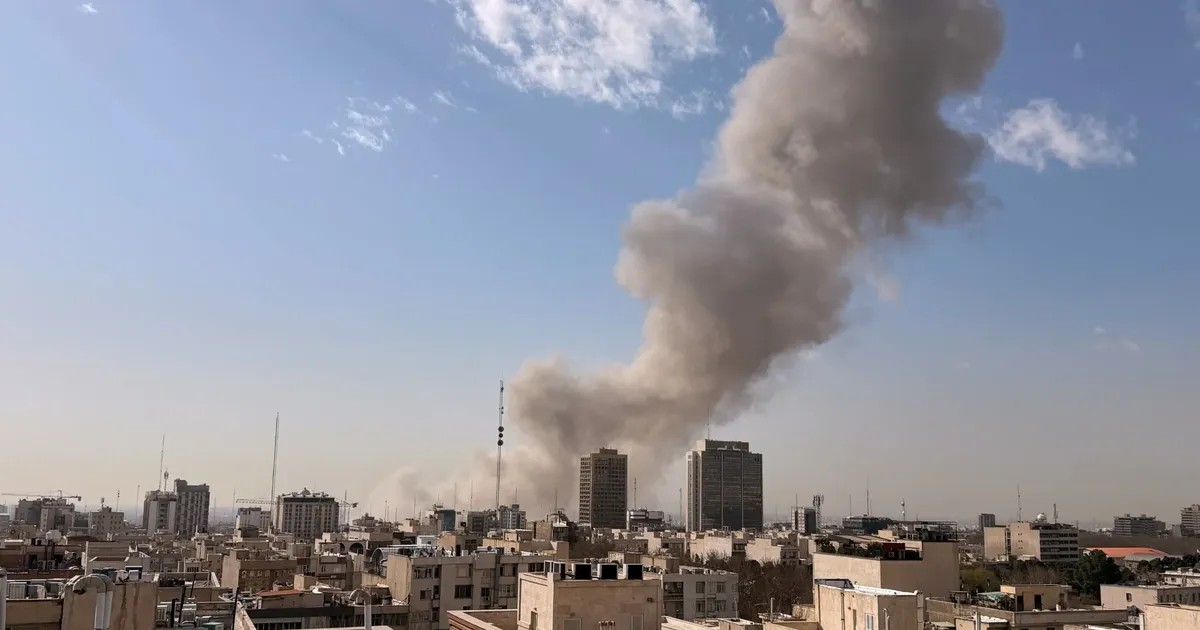
Iran Targets Tel Aviv and US Bases: Widening Middle East Conflict
The Middle East, a region perpetually on the brink, witnessed a significant escalation in tensions when reports emerged that
Iran struck Tel Aviv, marking a dangerous new phase in the protracted shadow war between Tehran and its adversaries. This audacious move by Iran was not an isolated incident but a direct, retaliatory response to earlier "preventive" strikes by Israel, which some sources suggested had US involvement. The events of February 28, a date etched in recent geopolitical history, saw a rapid and alarming exchange of hostilities that rippled across multiple nations, extending the conflict far beyond the immediate antagonists.
The Iranian agency Tasnim was quick to confirm the strikes, stating emphatically, "A new wave of Iran's missiles reached Tel Aviv." This declaration underscored Tehran's resolve to respond forcefully to perceived aggression, shifting the long-standing, covert confrontations into overt military action. The implications of Iran directly targeting a major Israeli city, alongside US military installations, sent shockwaves through international diplomatic circles, raising urgent questions about the potential for a full-scale regional conflagration.
A Dangerous Escalation: Iran's Retaliatory Strikes
The sequence of events leading to Iran's missile barrage began earlier on February 28 when Israel launched what it termed a "preventive" strike against Iranian territory. This attack was publicly confirmed by then-Israeli Defense Minister, Israel Katz. Further complicating the narrative, The New York Times, citing anonymous sources, reported on the potential complicity of the United States in these strikes against Tehran. Such an allegation, if proven, would significantly broaden the scope of direct actors in the conflict, transforming it from a bilateral proxy struggle into a multilateral confrontation.
In the wake of this perceived aggression by both Israel and the US, Iran's response was swift and multi-pronged. The Islamic Revolutionary Guard Corps (IRGC) took responsibility for the retaliatory strikes, vowing that Tehran's actions would continue "until the complete defeat of the enemy." This assertive stance indicated a shift from defensive posturing to an aggressive retaliatory doctrine, designed to demonstrate Iran's capability and willingness to hit back hard against perceived threats to its sovereignty and interests. The targeting of Tel Aviv, the economic and cultural heart of Israel, was a clear message, signaling that no Israeli population center was beyond reach if the conflict continued to escalate. For a deeper dive into the dynamics of such escalations, readers can explore
Iran Strikes Tel Aviv: A Retaliatory Escalation.
Beyond Tel Aviv: US Bases Under Fire
What distinguished this round of escalation was not only the direct targeting of Israeli territory but also the simultaneous attacks on US military bases spread across several Middle Eastern nations. Reports confirmed that American installations in countries such as the UAE, Qatar, Jordan, Bahrain, and Kuwait were hit. This move transformed the regional conflict into a direct challenge to the US military presence and its strategic alliances in the Persian Gulf and beyond.
The rationale behind hitting US bases likely stemmed from the Iranian perception of American involvement in the initial Israeli strikes, as well as a broader strategy to undermine US influence in the region. By demonstrating the vulnerability of these bases, Tehran aimed to send a message that support for its adversaries comes with a tangible cost. Unsurprisingly, these attacks drew strong condemnation from regional allies, with Saudi Arabia explicitly denouncing Iran's actions against these states. The expansion of targets significantly raises the stakes, drawing major global powers more directly into a volatile regional dynamic and jeopardizing the stability of nations that host these critical US assets.
The Pre-Strike Tensions: A Volatile Backdrop
The February 28 events did not occur in a vacuum but were the culmination of simmering tensions and a complex geopolitical backdrop. In the months prior, Iran had experienced significant internal unrest, with widespread protests in December and January. These demonstrations were met with severe government crackdowns, including internet restrictions, sparking international concern. Then-US President Donald Trump had issued stern warnings to the Iranian leadership, demanding an end to violence against protesters and hinting at potential US intervention. At one point, Trump famously spoke of an "enormous armada" approaching Iran, while simultaneously proposing negotiations on Iran's nuclear dossier, which led to some meetings in Geneva.
The day of the strikes itself was fraught with ominous signals. President Trump had stated that the US faced a "big and difficult decision" regarding Iran. Shortly after Israel's "preventive" strike, unconfirmed media reports suggested that the attack had successfully eliminated high-profile Iranian figures, including IRGC commander Mohammad Pakpour and Iranian Defense Minister Aziz Nasirzadeh. While these claims remain unverified, their circulation would have undoubtedly fueled Tehran's determination to retaliate forcefully. Adding to the tension, Trump had reportedly called for a military operation against Iran on that very day, urging Iranians to seek shelter and subsequently "take power" from their government, while also demanding security forces lay down arms. This cocktail of internal dissent, external threats, and unconfirmed reports created an exceptionally volatile environment that ultimately erupted in missile exchanges.
Understanding the Stakes: Implications for Regional Stability
The direct missile exchanges between Iran and Israel, coupled with attacks on US bases, have profound implications for regional and global stability. The immediate risk is a full-scale war, which would unleash unimaginable humanitarian suffering, displace millions, and have catastrophic economic consequences, particularly for global energy markets. The region, already grappling with various conflicts and humanitarian crises, can ill afford another major confrontation.
Furthermore, this widening conflict challenges existing alliances and security frameworks. Nations hosting US bases find themselves caught between powerful adversaries, potentially jeopardizing their own stability and sovereignty. The cycle of strikes and counter-strikes, as analyzed in
Israel-Iran Conflict: The Cycle of Strikes in the Middle East, represents a dangerous precedent, making it harder for international diplomacy to de-escalate tensions.
The Narrative Battle: Information Warfare
In such high-stakes conflicts, the battle for information is as critical as the military engagements. State-affiliated agencies like Tasnim play a crucial role in shaping the domestic and international narrative, often portraying their nation's actions as justified and victorious. Conversely, Western media outlets, often citing intelligence sources, provide alternative perspectives, sometimes confirming and sometimes contradicting official statements. For citizens and international observers, discerning truth from propaganda becomes a significant challenge. It is crucial to:
* **Consult multiple reputable news sources:** Avoid relying on a single outlet for information.
* **Be wary of unverified claims:** Especially during the initial chaos of events.
* **Understand the biases:** Recognize that every source, state or independent, may have an agenda.
* **Focus on confirmed facts:** Distinguish between official statements, reported claims, and analytical interpretations.
The rapid spread of information, and misinformation, can further complicate de-escalation efforts, making it harder for parties to find common ground.
The events surrounding Iran's decision to directly hit Tel Aviv and US military installations serve as a stark reminder of the volatile nature of the Middle East. The escalating cycle of "preventive" strikes and retaliatory actions risks pulling the region into a broader, more devastating conflict. The direct involvement of major powers, either perceived or actual, further complicates a situation already fraught with historical grievances, political rivalries, and internal pressures. As the world watches, the urgent need for robust diplomacy, de-escalation channels, and a commitment to peaceful resolution has never been more critical to prevent a regional flashpoint from igniting a global crisis.