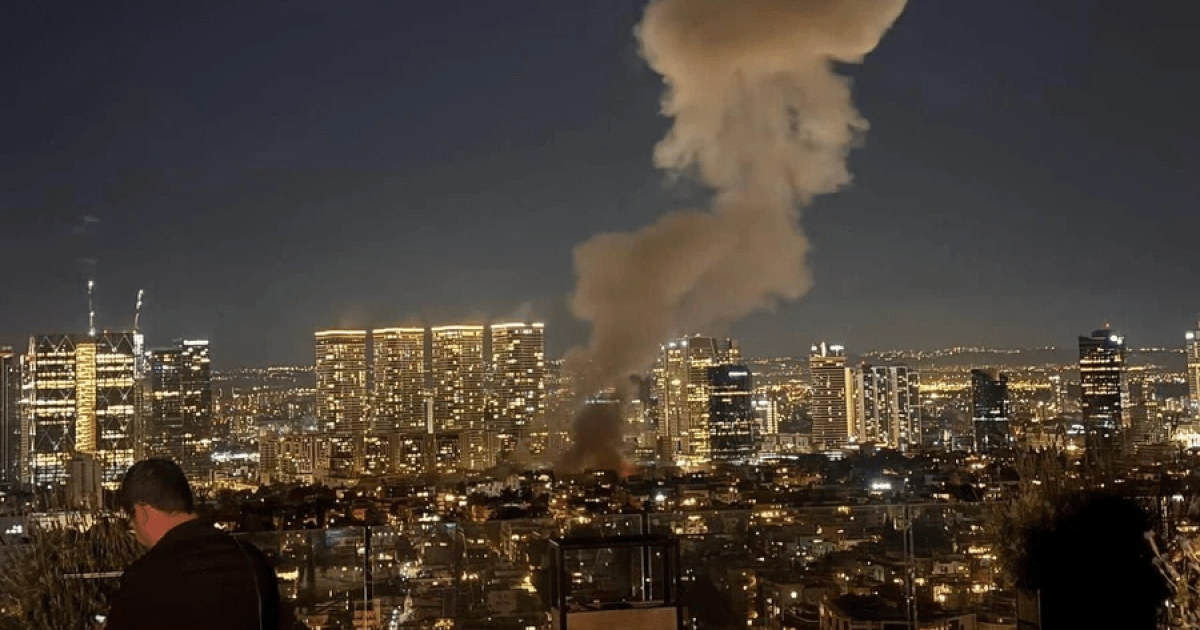
A Dangerous Escalation: Iran's Retaliatory Strikes on Tel Aviv
The Middle East once again finds itself on the precipice of wider conflict following a series of dramatic retaliatory actions. Recent reports from Iranian news agency Tasnim confirm that Iran launched missile strikes targeting the Israeli city of Tel Aviv. This significant development marks a dangerous escalation in the long-standing shadow war between the two regional powers, moving their simmering animosity into a direct, overt confrontation. The strikes by Tehran were presented as a direct response to what Iran described as Israeli and American aggression, threatening to unravel the fragile stability of an already volatile region. Understanding the genesis of these strikes requires delving into the immediate precursors and the deeper geopolitical currents at play.
The Preemptive Strike: Israel's Move and Alleged US Involvement
The immediate catalyst for Iran's missile barrage on Tel Aviv appears to be an earlier Israeli "preventive" strike on Iranian territory. On the morning of February 28th, Israel launched an attack that its Defense Minister, Israel Katz, confirmed was preemptive. While specific details of the Israeli operation remain scarce, the notion of a "preventive" strike suggests an attempt by Israel to neutralize a perceived imminent threat or to degrade Iranian capabilities before they could be used. Such operations are often shrouded in secrecy, with information released strategically to serve national interests.
Adding another layer of complexity and concern, reports from The New York Times, citing unnamed sources, suggested potential United States involvement in the Israeli strikes on Tehran. If confirmed, US complicity or direct support in an attack on Iranian soil would significantly broaden the scope of the conflict, drawing Washington into a more direct confrontation with Tehran. The implications of such involvement are vast, potentially shifting the dynamic from a regional rivalry to an international flashpoint, with global repercussions for diplomacy, security, and energy markets.
Tehran's Swift Response: Missiles Rain Down on Tel Aviv
Following the Israeli "preventive" strike, Iran wasted no time in executing its declared retaliation. Iranian state media, particularly Tasnim news agency, vociferously announced that a "new wave of missiles from Iran reached Tel Aviv." This declaration signaled a clear intent from Tehran to respond with force and demonstrate its capacity to strike at the heart of Israel. The Islamic Revolutionary Guard Corps (IRGC), a powerful and influential branch of Iran's military, unequivocally stated that these retaliatory actions would persist until their "enemy is completely defeated." This rhetoric underscores the deeply ingrained animosity and the existential nature of the conflict as perceived by both sides.
The choice to target Tel Aviv is highly symbolic. As Israel's economic and cultural hub, striking Tel Aviv carries significant psychological weight, aiming to demonstrate Iran's reach and resolve. While initial reports from Iranian sources might be short on specific details regarding the scale of the damage or casualties, the very act of targeting such a prominent city sends a clear message: Iran is willing and able to escalate if provoked. This direct Iran Targets Tel Aviv and US Bases: Widening Middle East Conflict is a stark reminder of the escalating risks in the region.
For individuals observing these events, it's crucial to cross-reference reports from multiple, reputable news agencies to gain a more balanced understanding, as official statements from involved parties often contain strategic messaging. Understanding the different narratives is key to grasping the full picture.
A Broader Canvas: Targeting US Bases and Regional Implications
Iran's retaliatory efforts were not confined solely to Israeli territory. The Islamic Republic also reportedly attacked American military bases situated in several Middle Eastern countries, including the United Arab Emirates and Qatar. This expansion of targets suggests a dual-pronged strategy by Tehran: to directly confront Israel while simultaneously signaling its displeasure and capability to strike at US interests in the region. The inclusion of US bases transforms the conflict from a bilateral Iran-Israel confrontation into a more intricate regional crisis with wider international implications.
Reports also indicated explosions in other states hosting US military presence, such as Jordan, Bahrain, and Kuwait. While Saudi Arabia condemned Iran's strikes on these nations, the broader regional reaction remains a complex mosaic of alliances, fears, and strategic calculations. The targeting of US assets places Washington in an even more precarious position, requiring a careful diplomatic and military response to protect its personnel and deter further aggression, without inadvertently fueling a wider war.
This widespread targeting highlights the interconnectedness of regional security and the delicate balance of power. Any strike, whether by design or miscalculation, risks triggering a chain reaction that could engulf the entire Middle East. This makes a careful review of historical Israel-Iran Conflict: The Cycle of Strikes in the Middle East essential for understanding the current trajectory.
Unpacking the Escalation: Context and Future Outlook
The recent events are not isolated incidents but rather the latest chapter in a long history of animosity and proxy warfare. Several factors contribute to the current heightened tensions:
- Internal Iranian Dynamics: The references indicate that Iran has been grappling with internal protests in recent months (December and January), during which authorities restricted internet access. US statements from figures like former President Trump, demanding Iran not to kill protesters and threatening intervention, add an external dimension to Iran's domestic challenges. Such internal pressures can sometimes lead regimes to adopt more aggressive foreign policy stances to rally nationalist support or deflect attention.
- Nuclear Dossier: While not explicitly stated as the direct cause of these specific strikes, the Iranian nuclear program remains a persistent point of contention. Past meetings in Geneva on the Iranian nuclear dossier suggest ongoing international concerns and diplomatic efforts, which often run in parallel with military posturing.
- Trump's Stance and Warnings: Former President Trump's strong rhetoric against Iran, including threats of an "enormous armada" and calls for the Iranian people to "take power into their own hands," have historically contributed to an already tense environment. His demand for Iranians to seek shelter during a proposed military operation against Iran, followed by Iran's declaration of a "large-scale offensive operation," highlights the tit-for-tat nature of the rhetoric and actions.
- Leadership Casualties (Alleged): Some media reports claimed that the Israeli "preventive" strike liquidated significant figures like IRGC commander Mohammad Pakpour and Iranian Defense Minister Aziz Nasirzadeh. While the veracity of these claims would need independent confirmation, such high-profile losses, if true, would undoubtedly necessitate a strong retaliatory response from Iran to maintain credibility and project strength.
The involvement of figures like Reza Pahlavi, son of the last Iranian Shah, calling for new protests and urging security forces to turn against the authorities, further complicates the internal and external pressures facing the current Iranian leadership. For the international community, the primary concern is preventing a full-scale regional conflict. De-escalation strategies often involve back-channel diplomacy, clear communication channels, and international mediation. However, with deep-seated mistrust and conflicting strategic objectives, finding common ground for de-escalation presents a significant challenge. Practical advice for policymakers would involve prioritizing diplomatic solutions, avoiding inflammatory rhetoric, and establishing robust mechanisms for crisis management.
Conclusion
The targeting of Tel Aviv by Iranian missiles represents a critical moment in the ongoing Iran-Israel conflict, carrying the distinct potential for further, dangerous escalation across the Middle East. Triggered by an Israeli "preventive" strike and possibly influenced by alleged US involvement, Tehran's response demonstrates its willingness to project power directly into Israeli territory and against American interests in the region. As the cycle of strikes and counter-strikes intensifies, the international community watches with bated breath, hopeful for de-escalation but wary of a wider conflict that could have devastating human and economic consequences globally. The path forward demands cautious diplomacy, restraint from all parties, and a renewed commitment to finding lasting, peaceful resolutions to deeply entrenched geopolitical grievances. The coming days will be crucial in determining whether this dangerous escalation can be contained or if it marks a new, more volatile chapter in the Middle East.